

When planning a drilling program — whether for mining, quarrying, or construction — one of the most fundamental decisions is choosing the right drilling method. Down-The-Hole (DTH) and Top Hammer are the two most widely used techniques, and each demands a different set of consumables. Understanding the differences will help you optimize your drilling performance and manage costs effectively.
What Is DTH Drilling?
Down-The-Hole drilling sends the hammer directly behind the drill bit, deep into the borehole. The percussive energy is delivered at the point of impact, making DTH ideal for deep holes where energy loss through the drill string would otherwise reduce efficiency. This method is preferred in hard rock formations and is widely used in mining, water well drilling, and blast hole drilling for quarries.
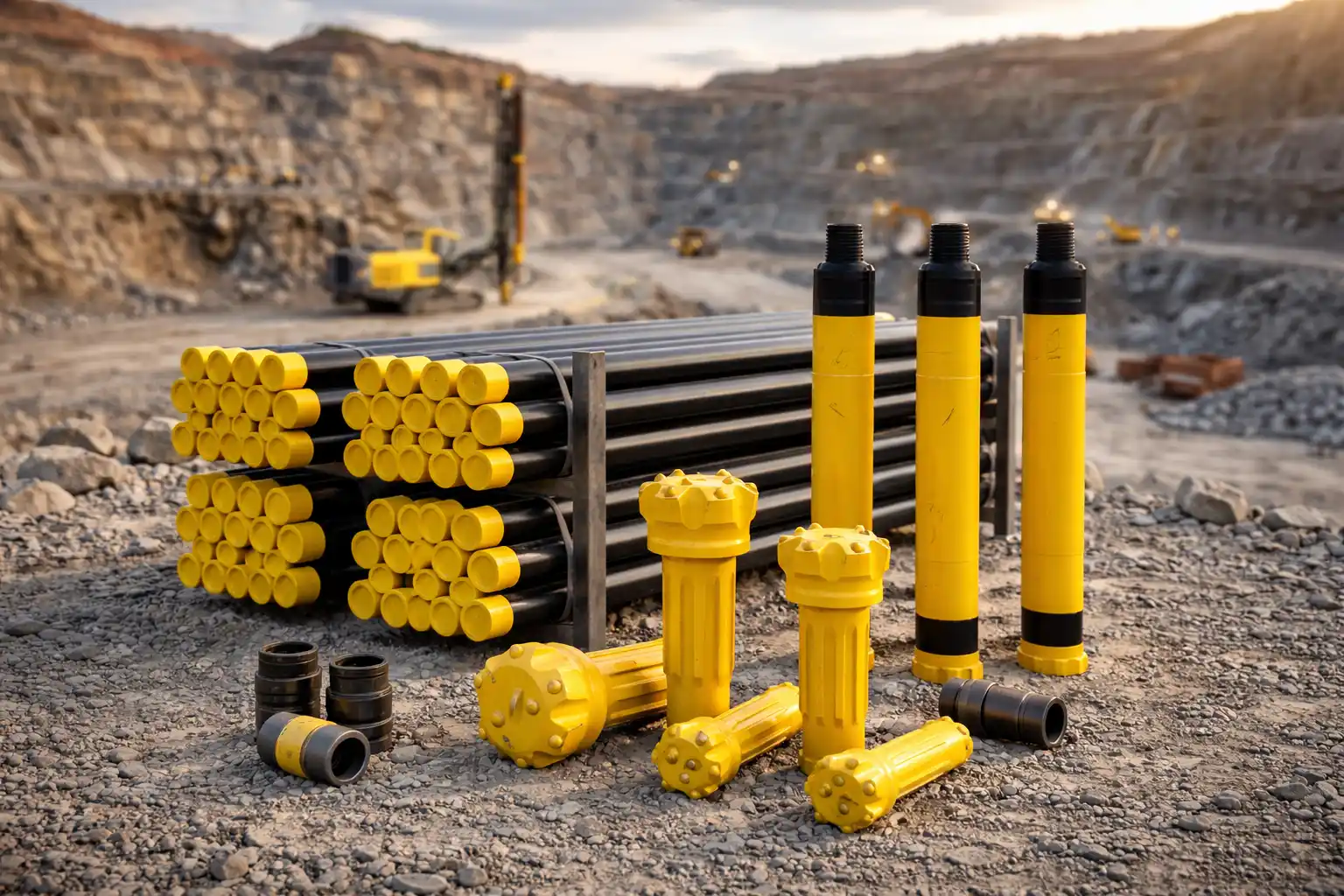
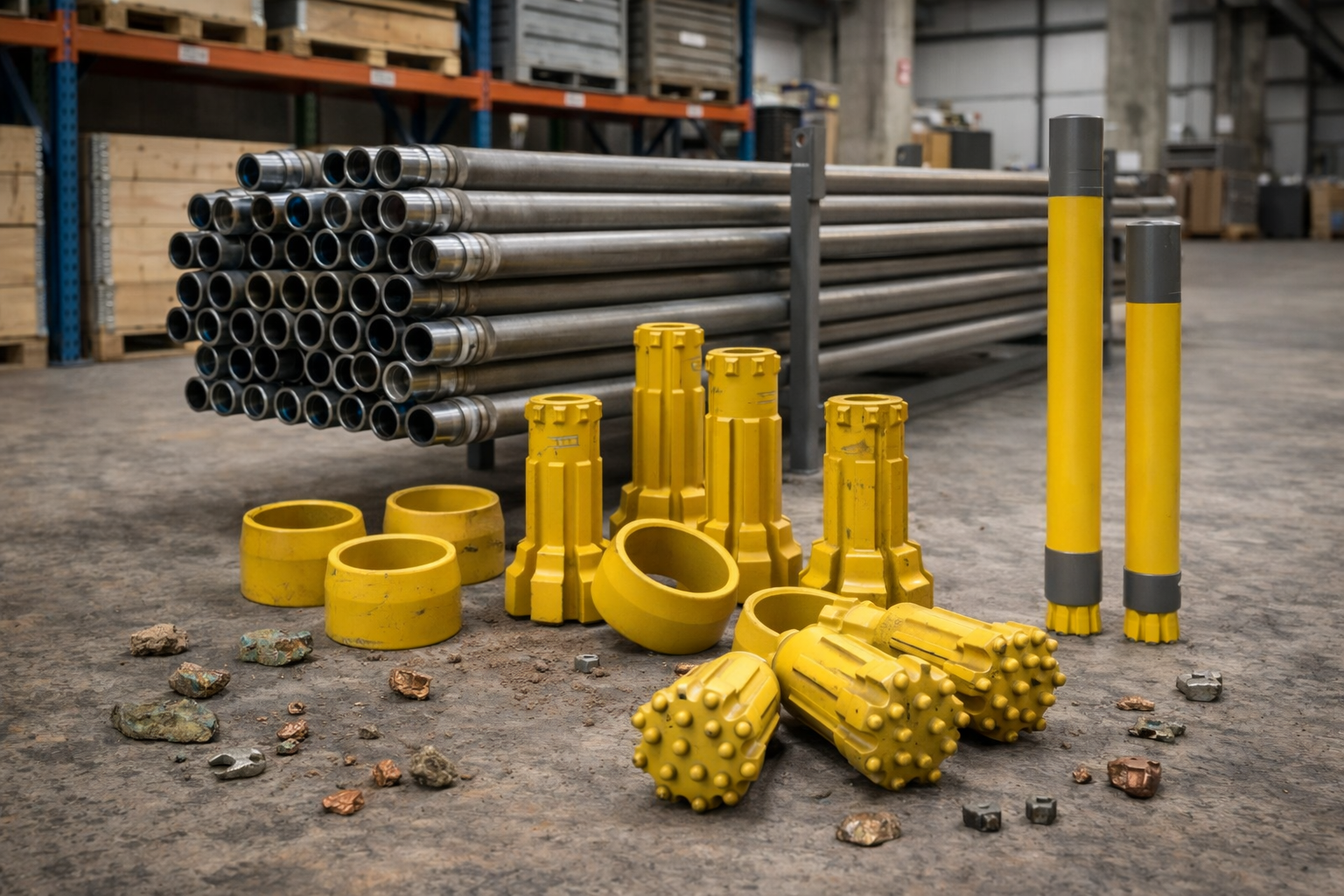
DTH consumables include DTH hammers, DTH bits (button bits with various face configurations), drill pipes, and casing systems. The key advantage of DTH is its ability to maintain consistent penetration rates at greater depths, along with producing straighter, more accurate holes.
What Is Top Hammer Drilling?
In Top Hammer drilling, the hammer and rotation mechanism sit at the top of the drill string, outside the hole. Percussive energy travels down through the drill rods to the bit. This method is highly efficient for shallower holes and is widely used in surface bench drilling, underground development, and production drilling.
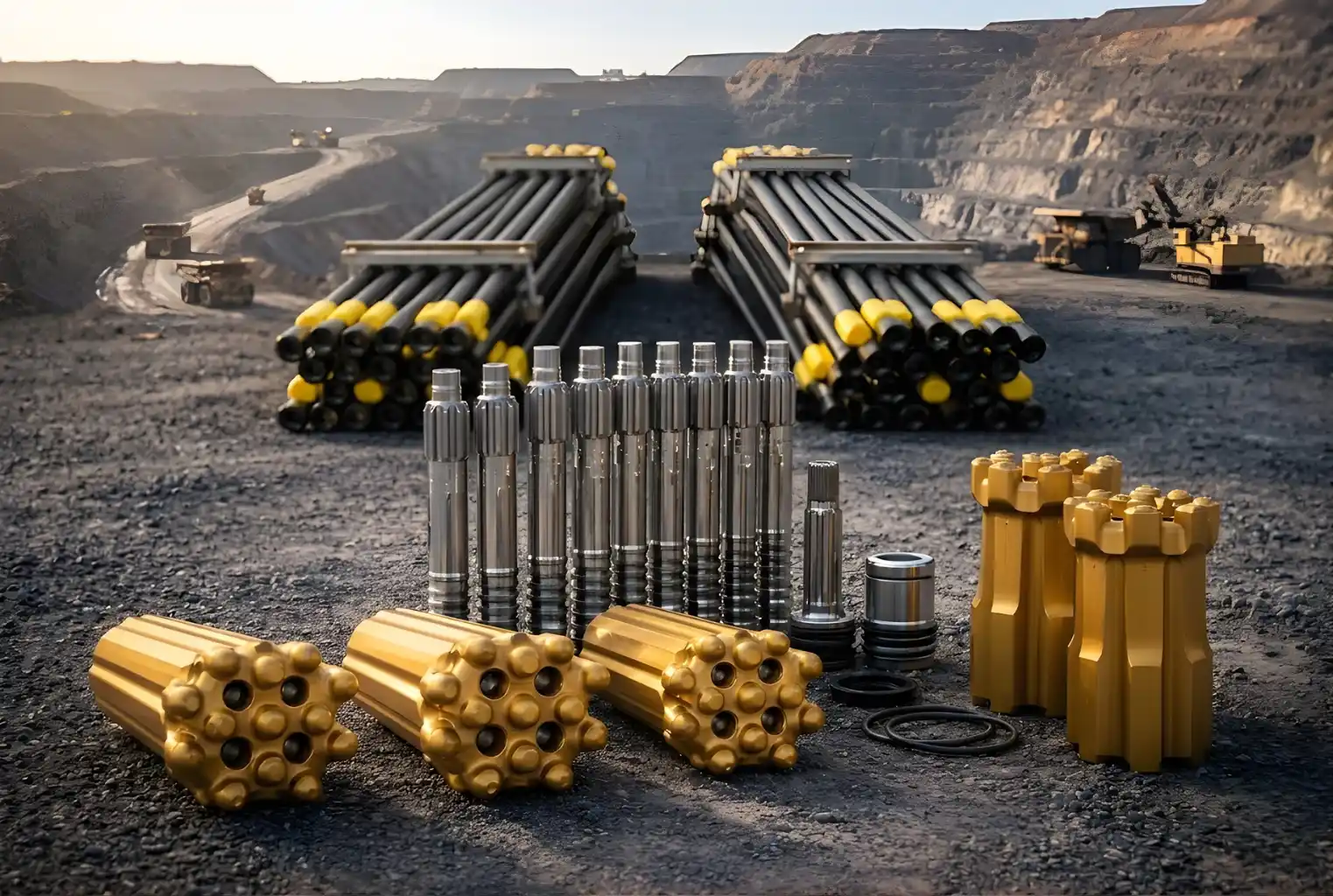
Top Hammer consumables include drill bits (cross bits, button bits, retrac bits), shank adapters, drill rods, and couplings. The advantage of Top Hammer is its speed and versatility for shorter, high-volume drilling programs.
How to Choose
The decision between DTH and Top Hammer comes down to several factors: hole depth, rock hardness, required hole diameter, and drilling accuracy requirements. For depths beyond 20–30 meters in hard rock, DTH generally outperforms Top Hammer due to less energy loss. For high-volume, shallower drilling, Top Hammer offers speed and cost efficiency.
Reverse Circulation (RC): The Exploration Option
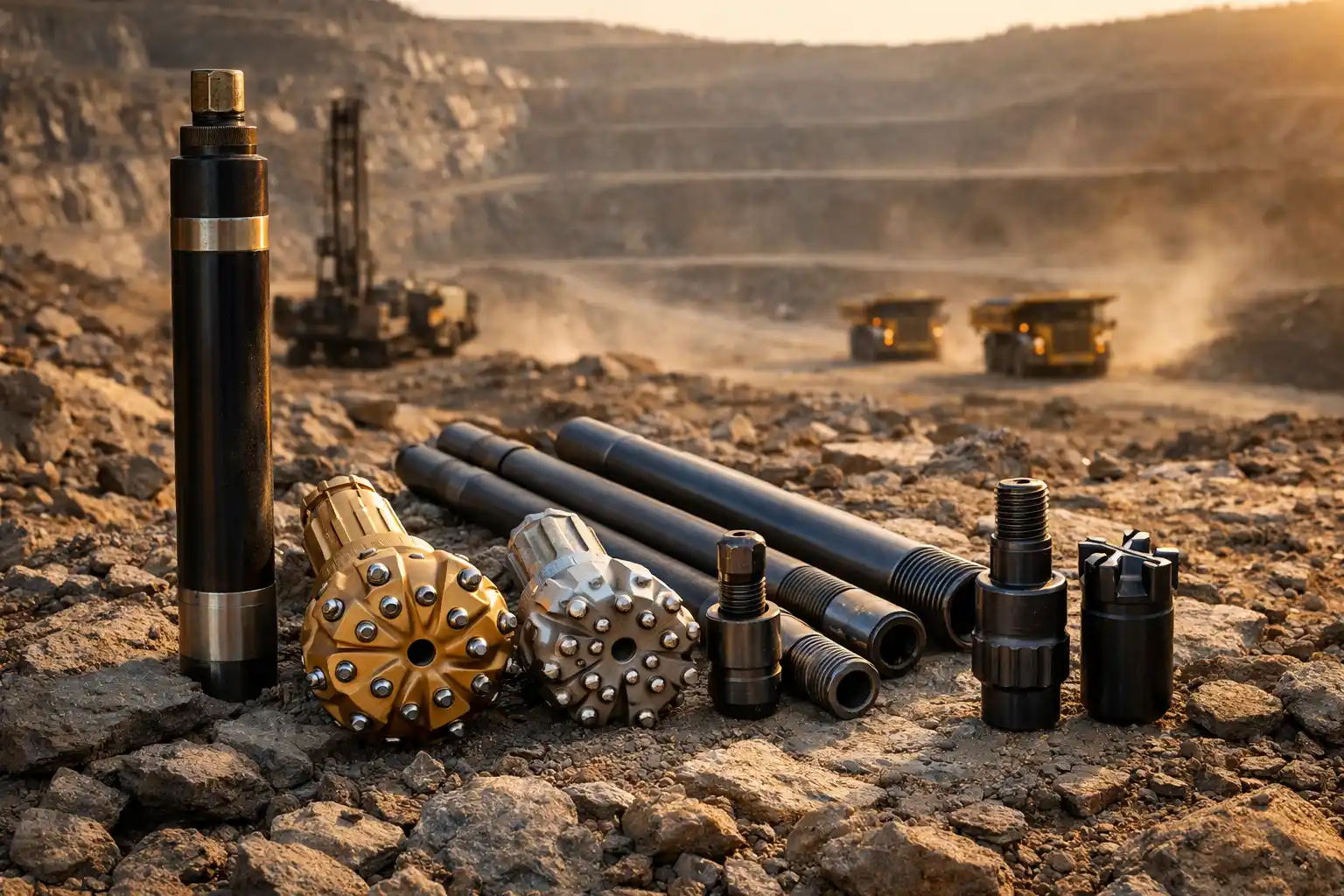
For exploration drilling where sample quality is critical, Reverse Circulation (RC) consumables offer a third option. RC drilling circulates compressed air to bring cuttings back to the surface through the inner drill string, providing representative rock samples without contamination. This method is essential for ore grade determination and resource estimation.
KTS Supplies: Your Consumables Partner
KTS Supplies stocks DTH consumables, Top Hammer tools, and RC consumables suited for the specific rock conditions and equipment used across Ghana’s mining operations. Whether you need to outfit a new drilling program or replenish a running operation, their team can help you select the right consumables for optimal performance.
Reach out to KTS Supplies today to get the right consumables matched to your drilling program.


